
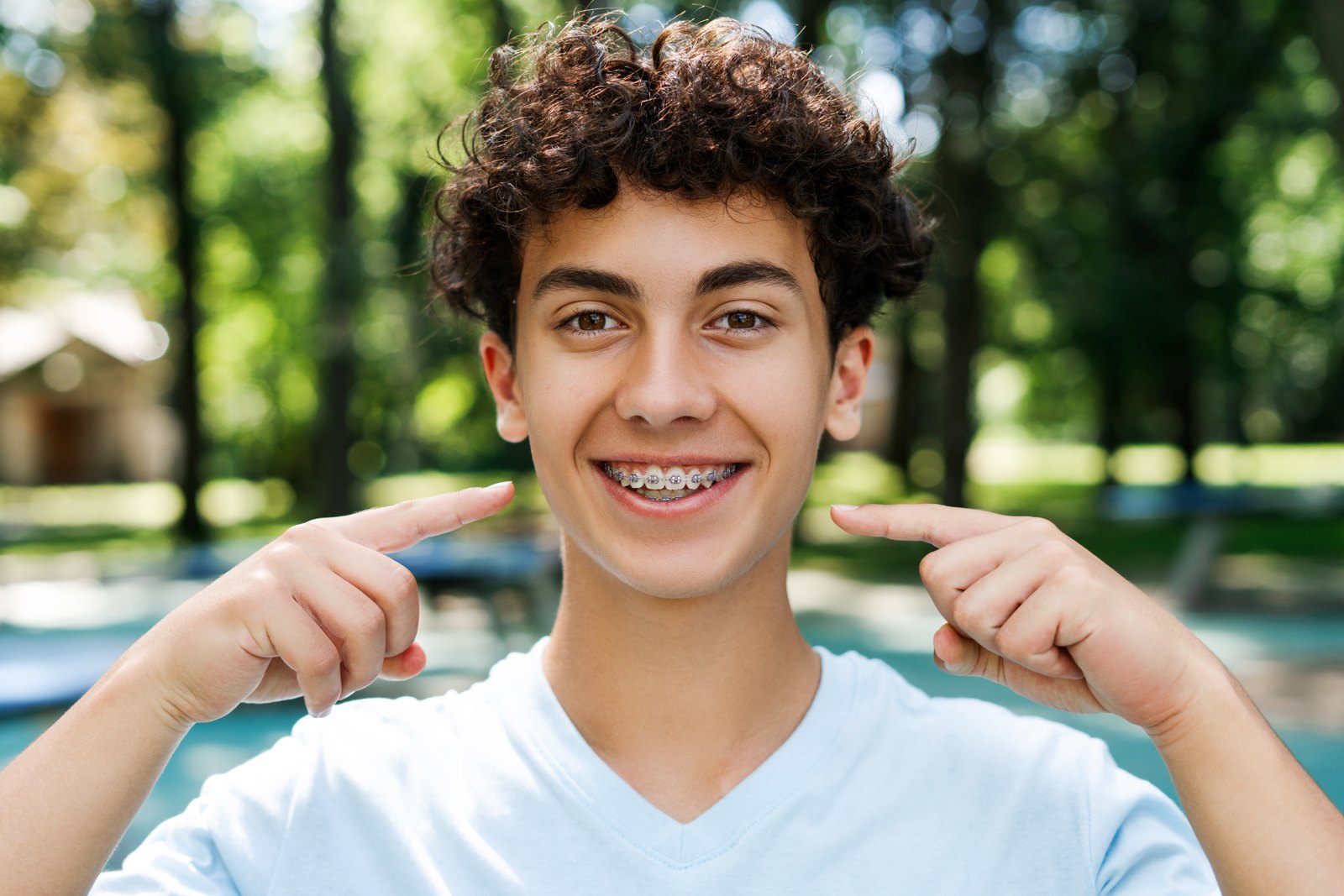
An impacted canine is an eyetooth that is stuck in the jaw and cannot come in on its own. Treatment usually means making room with braces and, if needed, a minor procedure to uncover the tooth so it can be guided into place.
The upper canines, often called eyeteeth, are among the last front teeth to come in, usually somewhere around ages 11 to 13. Because they arrive late and travel a long way to get there, they are also the front teeth most likely to get stuck. If your child’s dentist has mentioned an impacted or blocked canine, or a baby canine is hanging on long after its neighbors have changed, this guide explains what it means and what treatment involves.
What Is an Impacted Canine?
A tooth is impacted when it is fully formed but cannot erupt into the mouth on its own. With canines, the tooth usually develops high up in the jaw and moves down along the roots of the neighboring teeth. If it starts out at the wrong angle or runs out of room, it can stall in the bone, most often on the palate side of the upper jaw, sometimes on the cheek side.
Why canines matter so much
Canines have the longest roots in the mouth and sit at the corners of the smile. They guide the lower jaw when you move side to side and help protect the back teeth from heavy sideways forces. Losing one, or leaving one buried, affects both how the smile looks and how the bite works.
What Causes a Canine to Become Impacted?
- Not enough room: crowding leaves no space in the arch for the canine to come in
- A path that starts off course: the developing tooth is angled the wrong way from the beginning
- A baby canine that stays too long: a baby tooth that does not loosen can block the permanent one
- Family history: impacted canines and small or missing neighboring teeth tend to run in families
- Extra teeth or growths: less often, something physically sits in the way
Crowding is the cause families can do the most about, and it is one of the reasons orthodontists like to look at a child’s teeth before all the permanent teeth have arrived.
What Are the Signs of an Impacted Canine?
Impacted canines rarely hurt, which is why they are so often found on an X-ray rather than by a parent. Signs worth mentioning to your orthodontist or dentist include:
- A baby canine that is still firmly in place well after the other baby teeth have been replaced
- A gap where the canine should be, or a canine coming in high above the other teeth
- A bump you can feel on the roof of the mouth or high on the gum above the side teeth
- Front teeth that tip, shift or develop new gaps for no obvious reason
- A canine on one side that has come in while the other side has not
How impacted canines are diagnosed
A clinical exam is the first step, followed by X-rays that show where the tooth is and which way it is pointing. At Dorfman Orthodontic Group, a first visit includes a comprehensive orthodontic exam with X-rays if indicated, and our offices use digital X-ray machines and iTero scanners for comfortable, goop-free impressions.
How Are Impacted Canines Treated?
The right plan depends on the child’s age, where the canine sits and how much room there is. Treatment generally falls into a few approaches, and many patients need more than one.
Watching and making room early
When an impacted canine is spotted early, sometimes all it needs is space or an open path. Removing a stubborn baby canine at the right moment, or creating room in a crowded arch, can encourage the permanent tooth to correct its course on its own. This is one of the clearest examples of why timing matters, and it is part of what our post on Phase 1 orthodontic treatment covers.
Exposure and bonding with braces
If the canine will not come in by itself, the usual approach is a combined one. Braces open and hold the space first. Then a minor surgical procedure uncovers the tooth and attaches a small bracket with a fine chain. Over the following months, the orthodontist uses that chain and the braces to draw the canine down into its place in the arch, slowly and gently. If your child needs this step, Dr. Dorfman will explain how it fits into the treatment plan and timeline before anything begins.
When the canine cannot be saved
Occasionally a canine is positioned so poorly that bringing it in is not realistic, or it is fused to the bone. Then the options include removing it and either closing the space with braces or holding the space for a replacement tooth later. These cases are the exception, and they are another reason early detection helps.
Treatment Options Compared
| Approach | When it is used | What it involves | Typical role of braces |
|---|---|---|---|
| Monitoring and making space | Early detection, canine still able to correct its path | Removing a baby canine or creating room in the arch | Sometimes; may be part of early treatment |
| Exposure and bonding | Canine will not erupt but is in a usable position | Minor procedure to uncover the tooth and attach a bracket and chain | Essential: braces open the space and guide the tooth in |
| Removal and space management | Canine fused to bone or too far out of position | Removing the canine, then closing or holding the space | Used to close the gap or keep room for a replacement |
What Happens If an Impacted Canine Is Left Untreated?
An impacted canine does not stay quietly out of the way forever. Left alone, it can press against the roots of the neighboring front teeth and damage them, push teeth out of line, leave a lasting gap or a baby tooth that eventually fails, and in some cases develop a cyst around the buried tooth. These problems are much easier to prevent than to repair, which is why orthodontists treat a stuck canine as something to plan around rather than to ignore.
When Should a Child Be Checked for Impacted Canines?
The American Association of Orthodontists recommends a first orthodontic evaluation by age 7. That may sound early for a tooth that will not arrive for years, but a look at that age shows whether there is enough room, and later checks with X-rays can show whether the canines are heading the right way. Our post on your child’s first orthodontic visit explains what happens at that appointment. For many children the answer is simply to keep watching, and our complimentary DOG Kids Club exists to make that monitoring easy.
For teens whose canines are already late, the time to act is now. Treatment is still very effective in the teen years, and many teens with an impacted canine are already candidates for braces to correct crowding or the bite.
Frequently Asked Questions About Impacted Canines
Is the procedure to uncover an impacted canine painful?
It is a minor procedure performed with numbing, and most patients describe the days afterward as sore rather than painful. Soft foods and an over-the-counter pain reliever, taken as directed, usually handle it.
How long does it take to bring an impacted canine into place?
It varies with how far the tooth has to travel, and it is a slow process by design, because gentle force protects the tooth and its neighbors. Bringing in an impacted canine often adds time to braces treatment, and Dr. Dorfman will give you a realistic estimate at the start.
Can adults have an impacted canine treated?
Sometimes. Adult canines are harder to move because the bone is denser and the tooth is more likely to be fused, so adults are evaluated case by case.
Does insurance cover impacted canine treatment?
Coverage depends on your plan. We are in-network with most major insurance companies, and our team will check your benefits for you. Our insurance page explains how we handle claims and paperwork.
Get an Answer About Your Child’s Canines
If a baby canine is overstaying its welcome or your dentist has mentioned a blocked eyetooth, an orthodontic evaluation will show exactly where the tooth is and what, if anything, needs to happen. Learn more about braces for teens in Southampton, PA with Dr. Jake Dorfman, a board certified orthodontist who grew up in nearby Richboro.
Consultations are free and no referral is needed. Schedule your free consultation, or call our Southampton office at (215) 910-4376 or our Bensalem office at (215) 935-4639.